Image
Légende
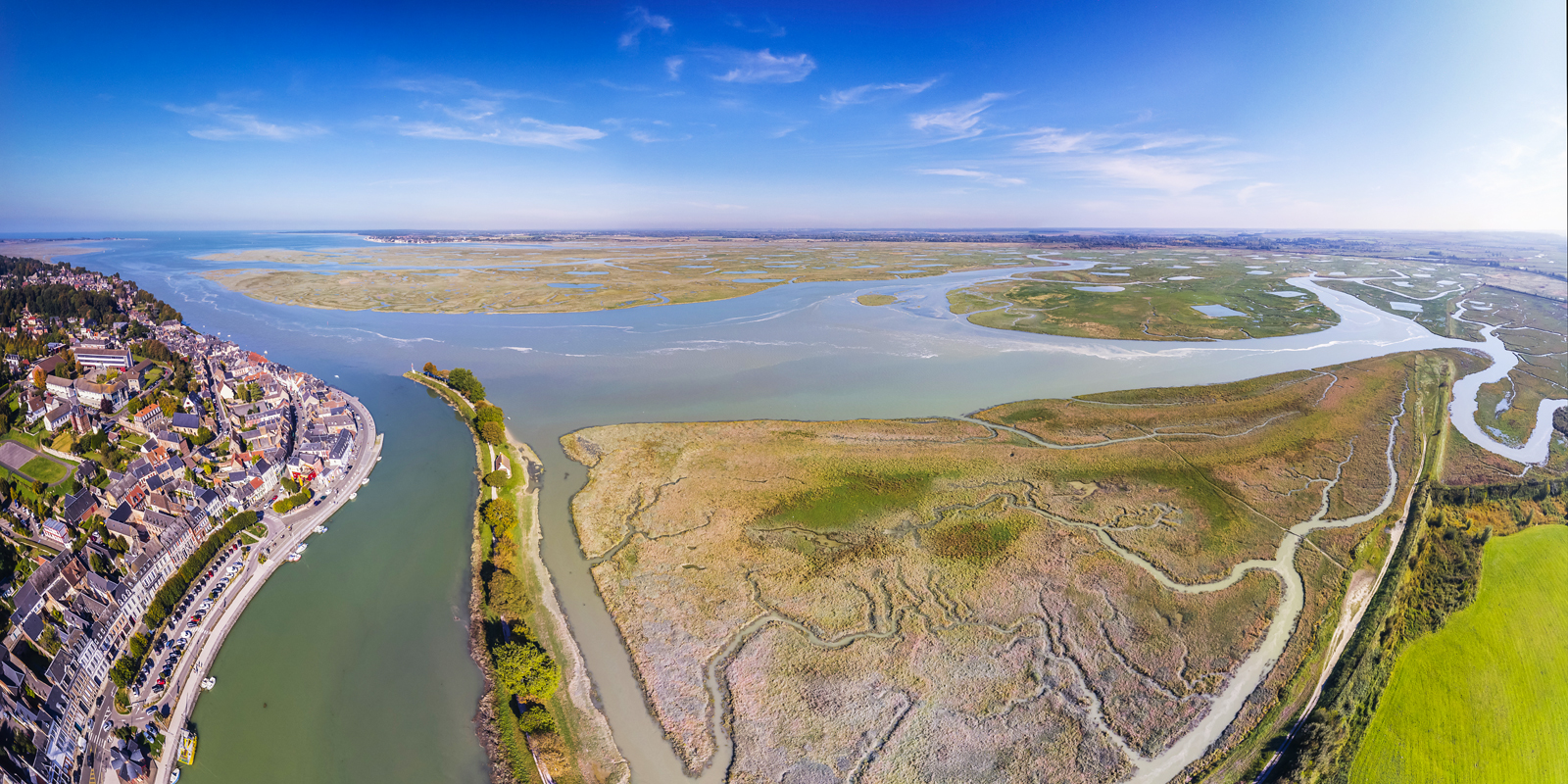
Coastal marshes in the Bay of the Somme. The Life Adapto+ project promotes the flexible, integrated management of coastal areas. © Adobe Stock
 French geological survey
Risks linked to the ground and subsurface
Coastal marshes in the Bay of the Somme. The Life Adapto+ project promotes the flexible, integrated management of coastal areas. © Adobe Stock
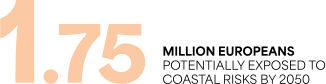
The rise in mean sea level is one of the consequences of climate change that can already be observed. Around the world, many coastal areas are exposed to risks that are progressively becoming more and more intense, such as coastal flooding, erosion and increasingly frequent extreme events. In this context, the development of adaptation strategies based on scientific knowledge is essential to help coastal regions manage these risks in the long term. According to several European forecasts, a growing proportion of the population and infrastructures in coastal areas could be exposed to these risks by 2050. This reality highlights the importance of developing tools to anticipate and plan the necessary adaptation measures.
To address these challenges, the CoCliCo (Coastal Climate Core Services) project, funded by the European Horizon 2020 programme and coordinated by BRGM, has led to the development of an open web platform, designed to provide information and support decision-making adapted to the rapidly changing context of the European coastline. “CoCliCo stands out from existing initiatives on coastal risks due to its European scope and the fact that it is based on open datasets,” explains Gonéri Le Cozannet. “The project aims to help public decision-makers, urban planners and researchers assess coastal risks, and particularly the exposure of populations and infrastructures, while also exploring future scenarios in order to facilitate the planning of coastal protection strategies.”
The platform provides interactive maps that allow users to access high-resolution projections of sea-level rise, analyse flood and erosion risks, and compare different adaptation strategies, incorporating cost-benefit analyses. A workspace enables users to exploit these models at different scales, in particular by importing external data for specific case studies. “CoCliCo does far more than simply supply data; it provides a genuine decision-making support service,” explains Gonéri Le Cozannet. The platform gives users access to a tool capable of cross-referencing scientific data, climate forecasts and socio-economic indicators in order to plan coastal resilience measures more effectively.
The platform is therefore designed as a scientific demonstrator, with scope for further development in the years to come. “We have drawn up a solid plan for upgrading CoCliCo, notably with a view to using it as the foundation for a European coastal monitoring service within Copernicus Marine,” says Gonéri Le Cozannet. Rather than acting as a demonstrator, this integration would turn the project into a genuine European decision-making support service, drawing on marine reference data that are regularly updated and standardised across Europe. It would also consolidate interoperability with other European services and facilitate the dissemination of information to local authorities and coastal managers.
Alongside the development of CoCliCo, BRGM is contributing to several other initiatives focused on adapting coastal areas to climate change. One of these initiatives is the Life Adapto+ project, managed by the Coastal Conservatory and continuing on from the Life Adapto project (2017–2022). Here, the aim is to help local authorities to implement flexible coastal management policies, drawing on the experience of pilot sites in France and developed in collaboration with local stakeholders. “This concept refers to a coastal management approach that aims to preserve and support the mobility of the coastline, drawing on the different mechanisms via which the land and sea interact,” explains Olivier Brivois. “It is based on natural processes aimed at generating benefits for society and ecosystems and involves an integrated approach across a broader coastal area.”
CoCliCo and Life Adapto+ therefore represent two complementary approaches to the same issue. “One of CoCliCo’s objectives is also to raise awareness about the reality of coastal risks and to view this issue as a key aspect of national and European resilience and sovereignty,” says Gonéri Le Cozannet.
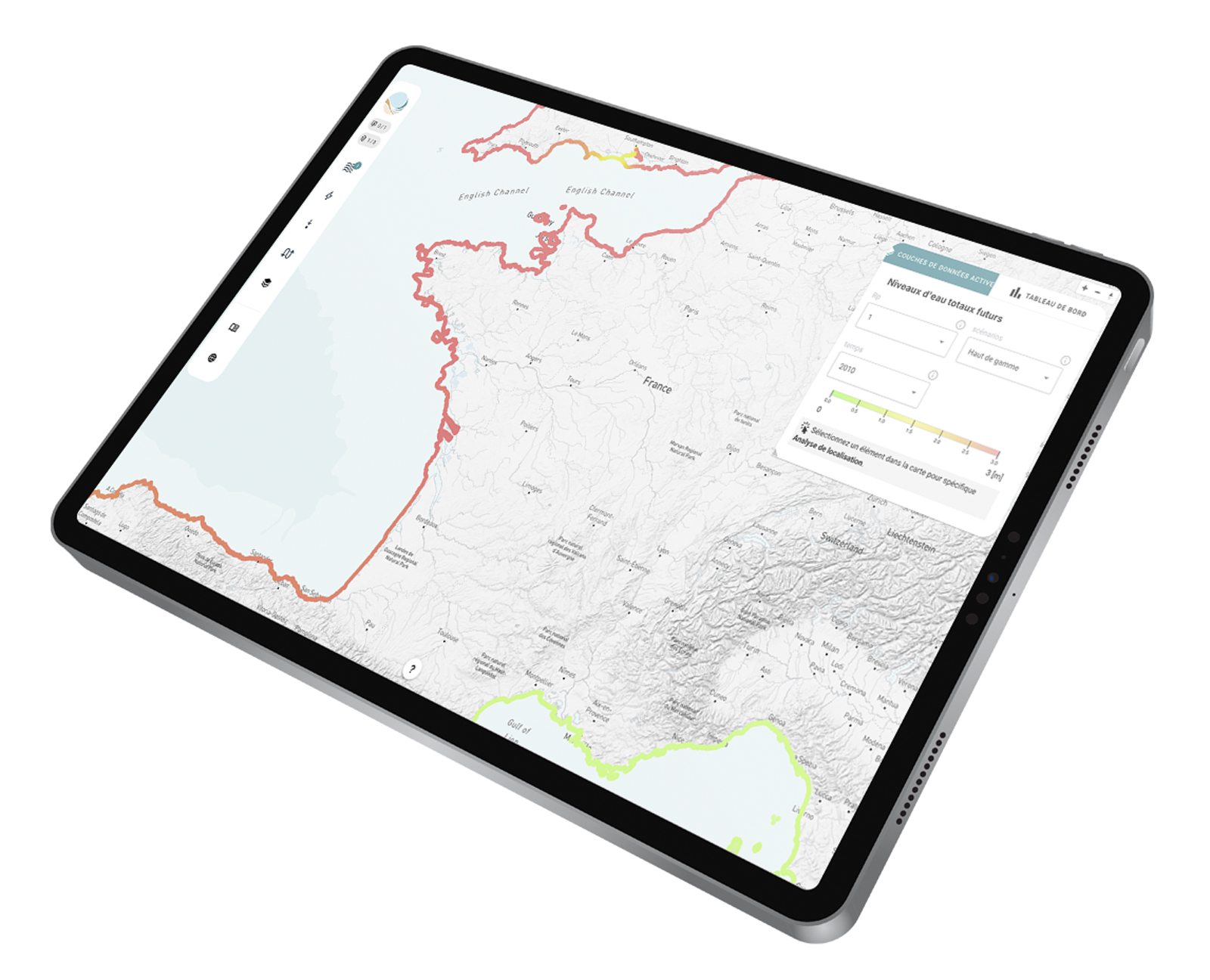
The CoCliCo web platform notably enables users to display quantified projections of sea-level rise along the entire European coastline. © CoCliCo