


Image
Légende
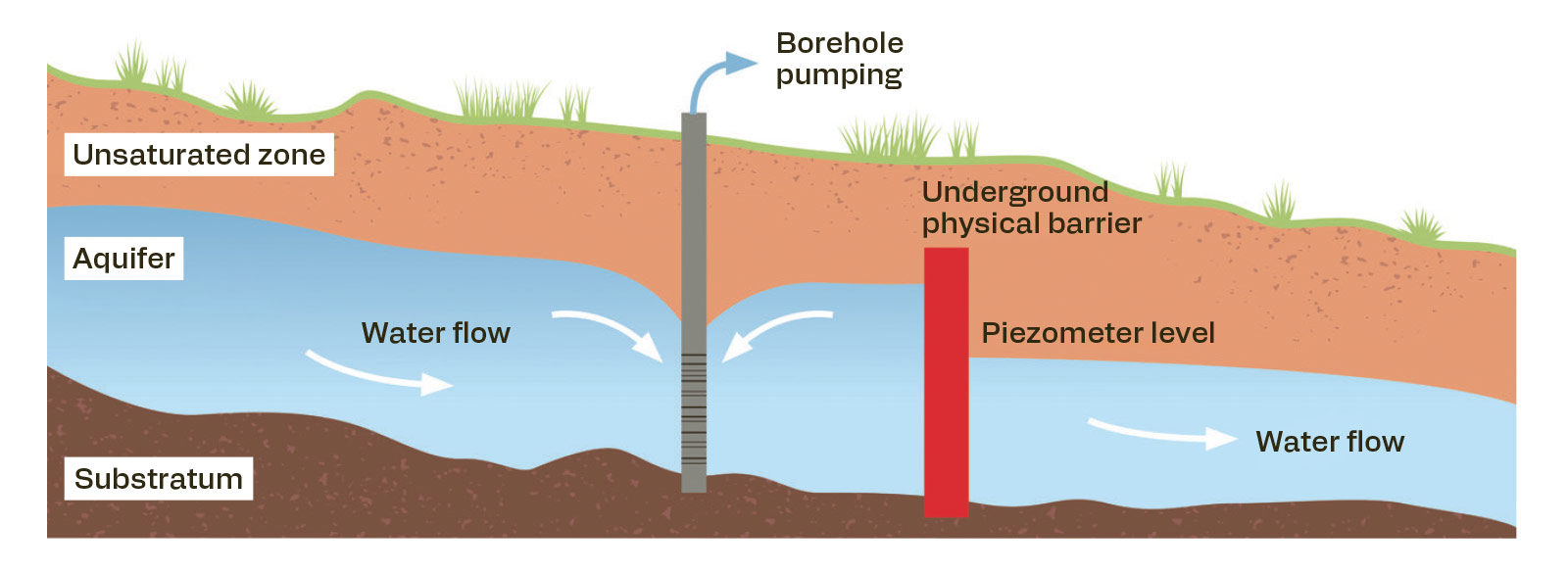
Operating principle of an underground physical barrier (UPB) in a continental environment for water storage purposes, with a pumping system. © Frissant-Dewandel-Gouy
 French geological survey
Groundwater and resource preservation
Underground physical barriers (UPBs) have been used for decades in regions with significant variations in rainfall. In particular, these structures are for storing water in its natural environment, protected from evaporation and without any risk of micro-organism proliferation, while allowing it to be replenished so that it is available for future use. Could UPBs be used for adapting to severe droughts? At the request of the Gardons Territorial Public Basin Authority (EPTB), BRGM carried out a survey of the various types of UPB around the world, developed modelling tools to analyse the impact of some of them and in particular studied the one at Massillargues-Attuech (Gard), the only known example in France. The survey report is available online on the InfoTerre portal.
Operating principle of an underground physical barrier (UPB) in a continental environment for water storage purposes, with a pumping system. © Frissant-Dewandel-Gouy
The BRGM has joined forces with its partners to tackle the reverse flow phenomenon which, in the Thau lagoon (Occitania), regularly affects the source of the Vise and exposes freshwater resources to salt water. A novel monitoring system was first put in place in order to understand and monitor this phenomenon and its impact on the karst aquifer. A paper was published in the journal Nature Communications Earth & Environment showing that the phenomenon was caused by the difference in pressure between the aquifer and the lagoon, as salt water is denser. An innovative system was then installed in the summer of 2025 at the point where the source of the Vise flows into the lagoon, in order to limit saltwater intrusion into the aquifer while maintaining natural freshwater flows. This unprecedented trial is planned to run for three years and could be replicated at other sites affected by this phenomenon.
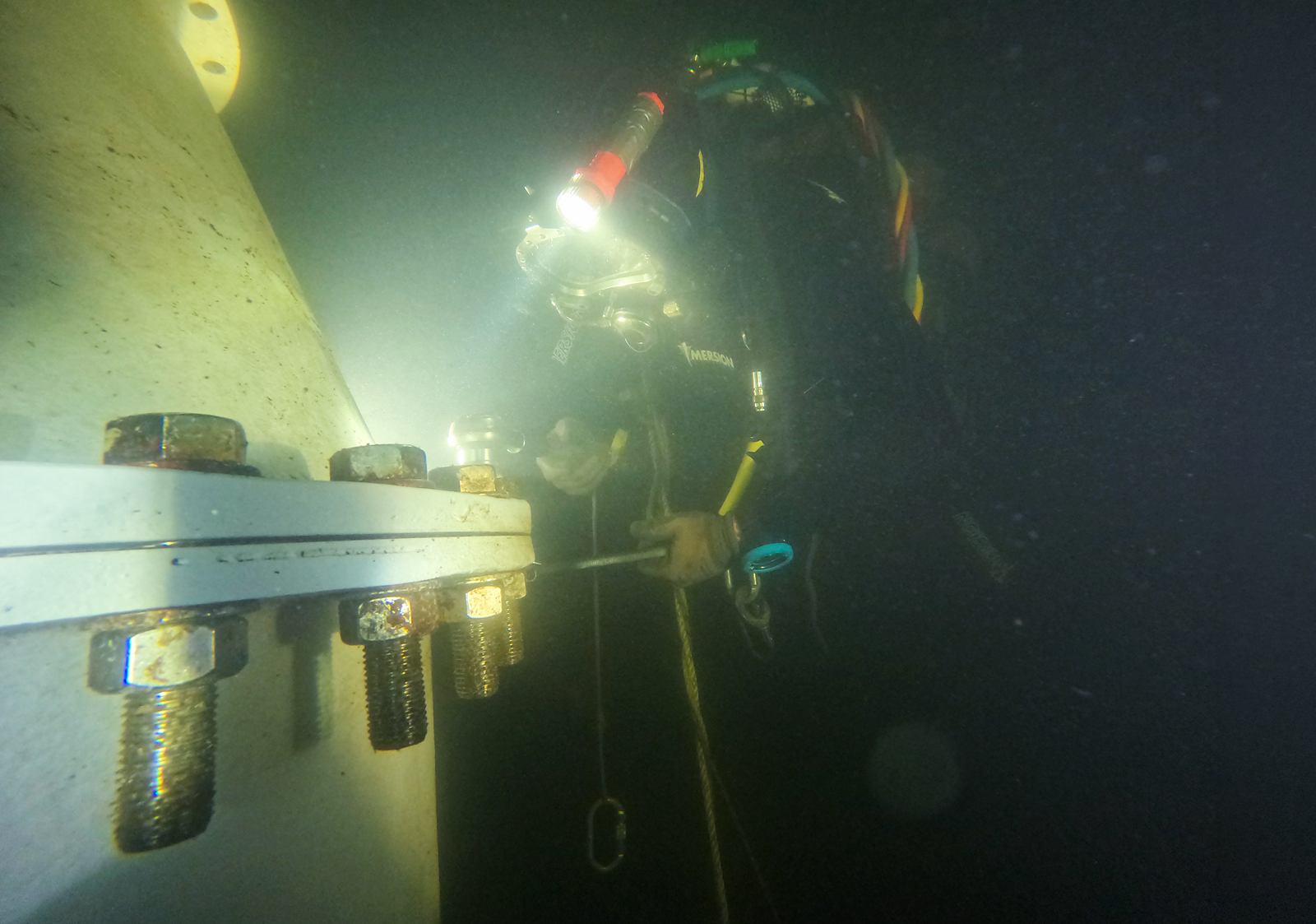
A system designed to limit the reverse flow phenomenon has been installed on the bed of the Thau lagoon at a depth of 27 metres. © ANTEA
BRGM was among approximately 170 participants from around thirty countries represented at the International Symposium on Managed Aquifer Recharge (ISMAR), held from 28 April to 2 May in Stellenbosch, South Africa. The team presented an overview of the implementation in France of this solution for sustainable water resource management in the context of climate change, along with the results of a project carried out in Ethiopia and funded by the French Development Agency (AFD). Against a backdrop of increasing climatic and demographic pressure, this research resulted in the production of a map showing the suitability of land around Dire Dawa and Jijiga for managed aquifer recharge.
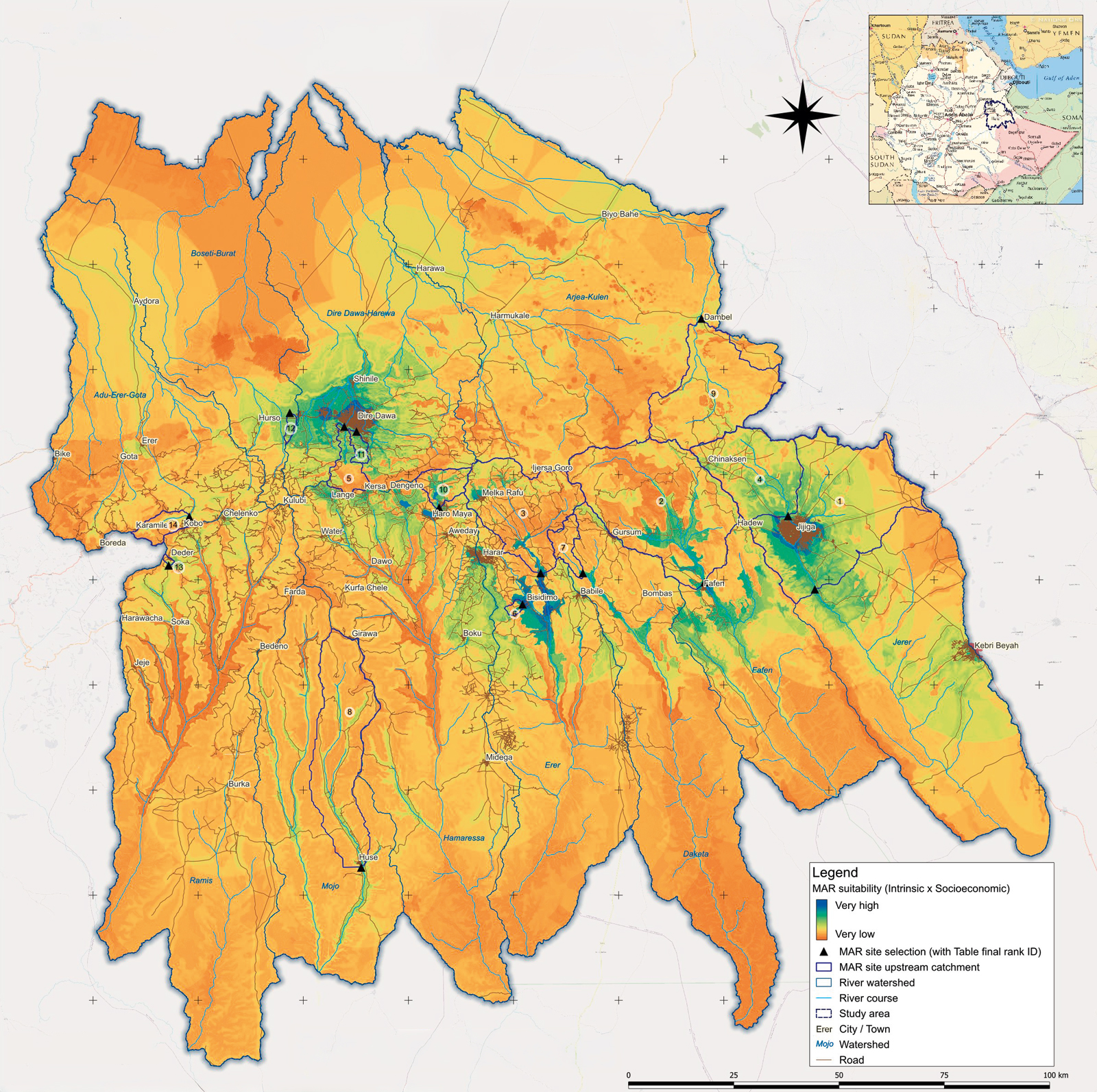
Map of the region around Dire Dawa and Jijiga in eastern Ethiopia, showing the suitability of the land for managed aquifer recharge. © brgm
Having identified new underground drinking water resources between 2023 and 2025, BRGM was commissioned by Les eaux de Mayotte (the Mayotte water authority - LEMA) to assist with the drilling of 24 boreholes. Supported by the Eau Mayotte (Mayotte Water) 2024–2027 plan launched by the French Government, this seventh campaign is intended to diversify the island’s sources of supply and drinking water production capacity. The scientific data collected in this way will be shared and put to good use, also providing information to back up discussions on Mayotte’s future water strategy.
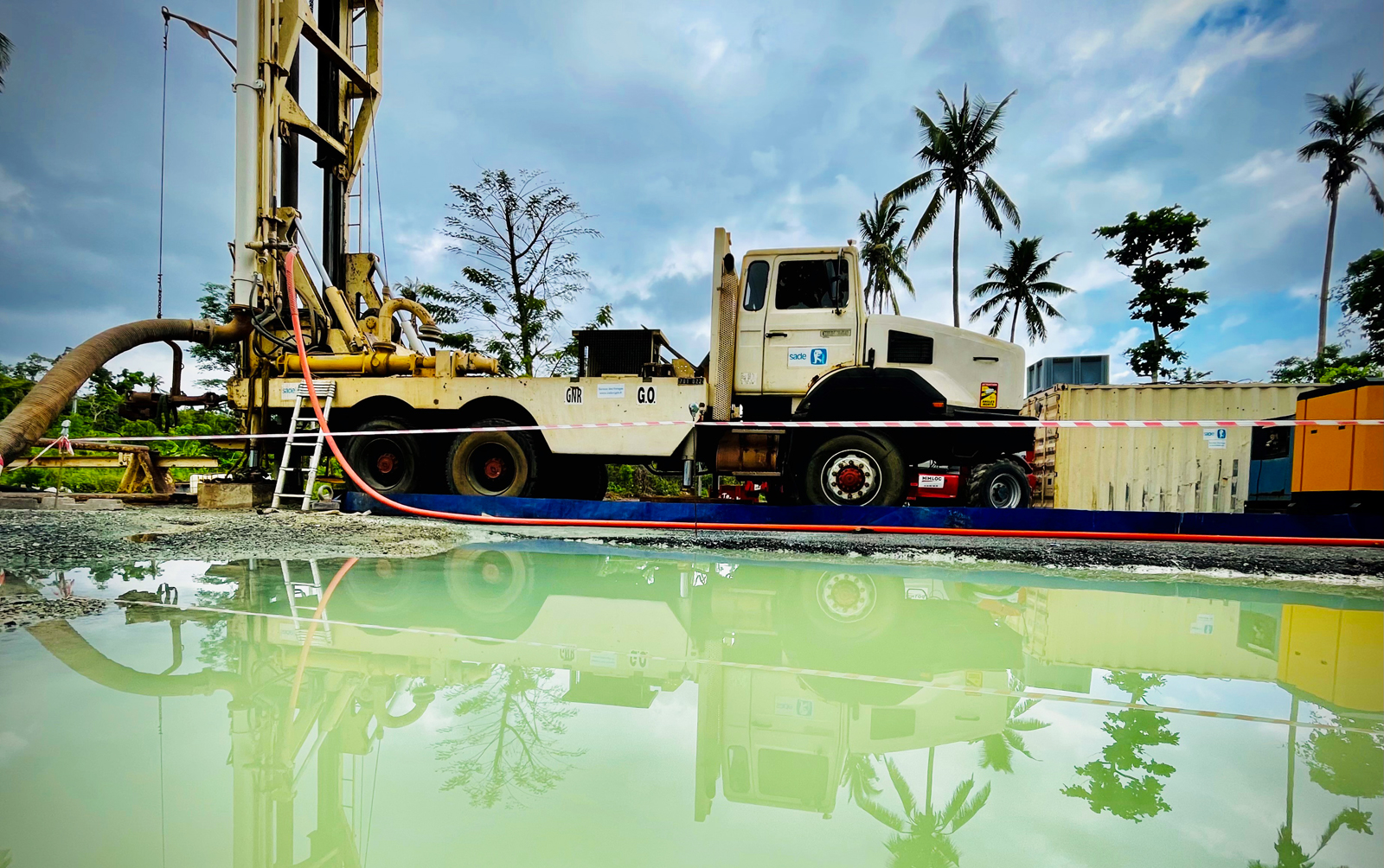
The Ouroveni drilling project currently in progress on the island of Mayotte. © brgm
In response to the chronic deterioration in water quality in the Jura Mountains, under the NUTRI-Karst project, BRGM has analysed and quantified the multi-factor sources of the nutrients found there (mainly nitrogen and phosphorus), highlighting the impacts of certain agricultural practices, sewage discharge and climate change. In collaboration with the Doubs-Territoire de Belfort Interdepartmental Chamber of Agriculture, BRGM has also identified which agricultural practices should be prioritised and which pose a risk. It has shared these recommendations with the relevant stakeholders. More than 100 initiatives were proposed in this way.
Adversely affected by the multi-year drought of 2022–2025, the Pyrénées-Orientales department has launched a resilience plan to adapt the region. In this context, and as part of the European Water4All partnership, in March 2025 BRGM spearheaded the joint development of a Water Oriented Living Lab (WOLL). This is a forum for cooperation and innovation dedicated to water resource management in the face of climate change. Reflecting the widespread interest in this initiative, meetings held in July and then in November involved dozens of researchers, local authorities, socio-economic stakeholders and organisations. These discussions helped to identify priority research areas, the activities to be carried out and the governance and operating procedures of AQUALAB 66.
Led by BRGM and co-funded by the Centre-Val de Loire regional authority, the ARD Junon programme aims to establish a digital hub dedicated to natural resource management. A prototype digital twin of the Beauce aquifer was developed in 2025. It continuously simulates and forecasts changes in groundwater levels over a 3 to 6-month period. With around twenty partners, Junon is also developing other digital twins: water quality, air quality, satellite-based approaches and wetlands. All are based on a robust architecture and a methodological framework designed to be extended to other use cases.

