


Image
Légende
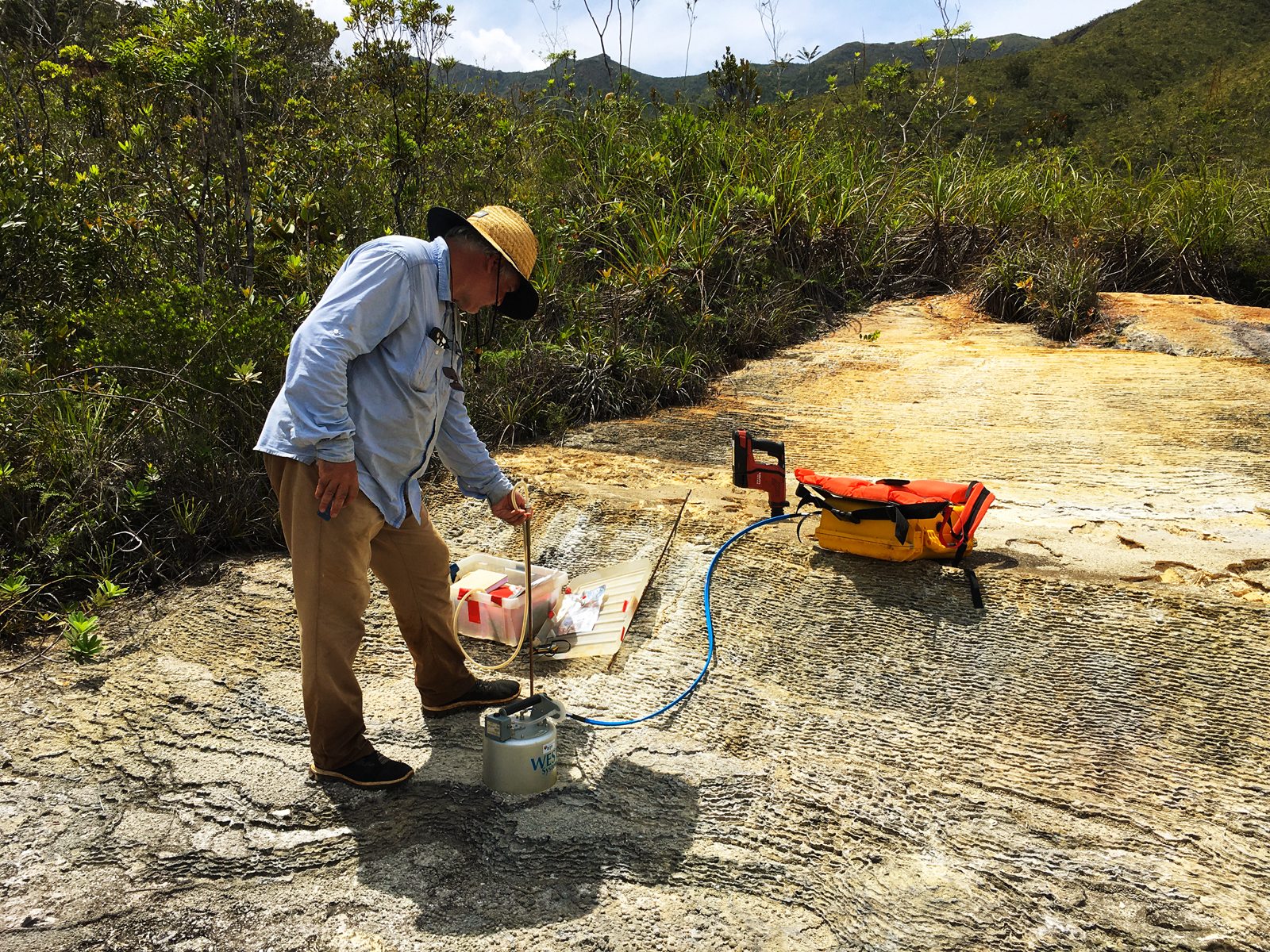
Measuring gas flow and concentration in the travertine deposited by the hyperalkaline source known as the northern Yaté lake or “Angelline”. © brgm
 French geological survey
Subsurface energy and decarbonisation
BRGM, in association with Lavoisier H2, conducted a pre-exploratory survey of New Caledonia’s potential for native (or natural) hydrogen, generated by serpentinisation processes, on behalf of the CNRTEC (Centre for Nickel – Research, Technology, Environment and Competitiveness). Local production of carbon-free energy could provide a boost for New Caledonia’s nickel industry. Based on the compilation of existing data and the implementation of geochemical field measurements, this research has led to a clearer understanding of the fate of near-surface gas and the characterisation of hydrogen-emitting zones. Further investigations will be necessary, particularly in the geophysical field, to increase knowledge and assess resources.
Measuring gas flow and concentration in the travertine deposited by the hyperalkaline source known as the northern Yaté lake or “Angelline”. © brgm
As part of its collaboration with Andra in the storage of high-level long-lived radioactive waste (HLW-LL), BRGM has launched the VERMEA II project, building on its experience in the original VERMEA project (2019–2024). The project has two main aims. The first is to predict the geochemical and mineralogical changes to the annular space filling poured between the lining of the HLW-LL storage cell and the geological formation. The second is to study the behaviour of a type of glass similar to the type used to vitrify the waste, when it comes into contact with the solution at equilibrium with the filling material. By shedding further light on the processes of ageing, weathering and multi-material interactions, VERMEA II will seek to enhance capacities for modelling the behaviour of HLW-LL cells.
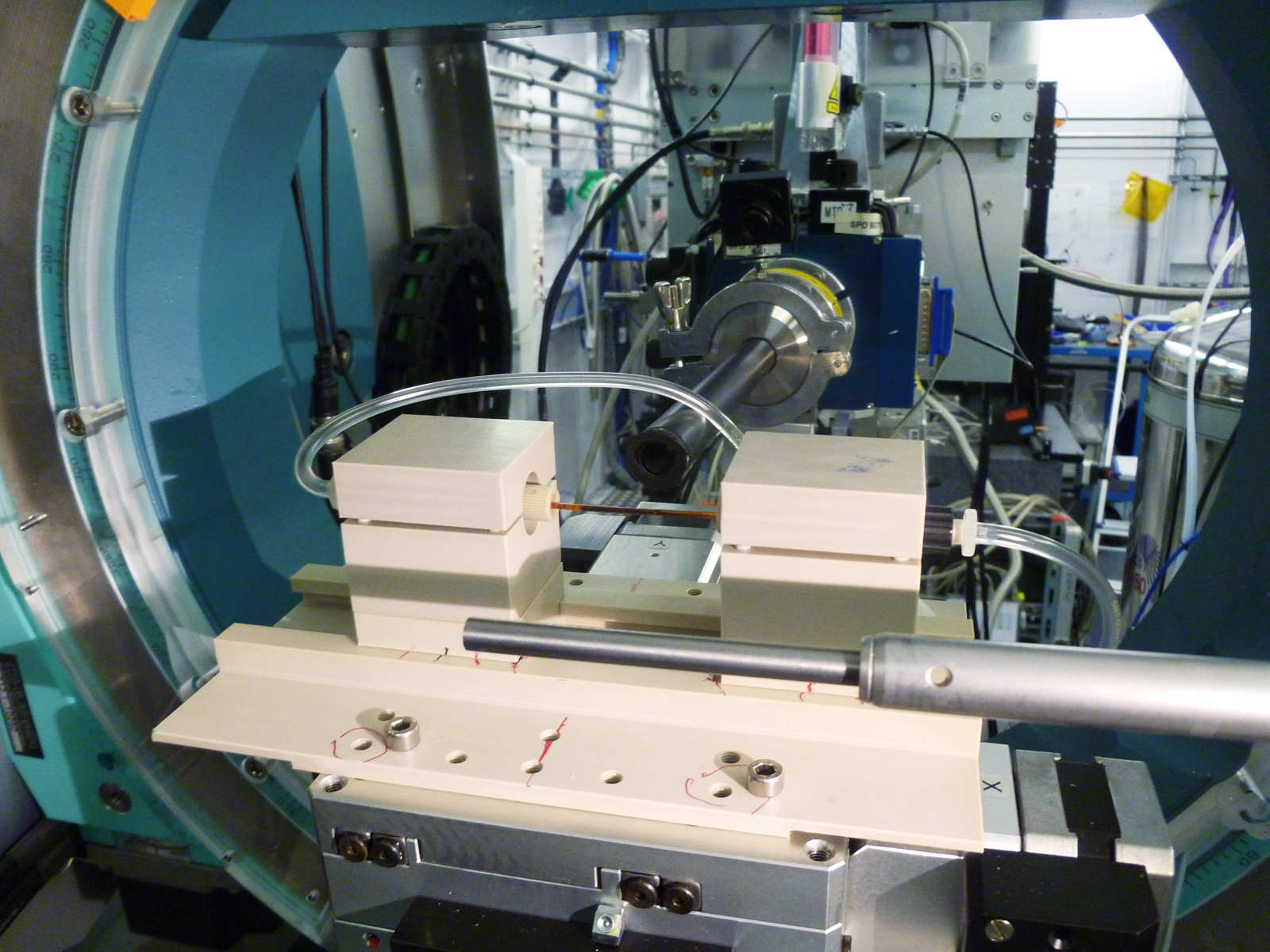
The VERMEA II project combines analyses – primarily using the synchrotron (pictured) – with modelling and artificial intelligence techniques. © brgm
In March 2025, the partners in the Franco-German project Artificial Intelligence for Induced Seismicity (AIS) presented their progress to the scientific community gathered in Davos for the fourth Schatzalp Workshop on induced seismicity. AIS is seeking to expand the use of artificial intelligence through the detection and location of induced earthquakes using machine learning, the development of seismic sensors with embedded machine learning algorithms, and the use of machine learning to predict induced seismicity. This last aspect has been tested successfully in France and the United States.
Initiated by BRGM, the GLITER project supports the exploration and co-production of lithium and heat in the Bas-Rhin region. The purpose of the research is to develop a comprehensive model illustrating the operation of the deep geothermal system of the Upper Rhine Graben, and also to map the areas where heat and lithium are available on a sustainable basis. In 2025, the characterisation of reservoir rocks and geothermal fluids made it possible to identify sources of lithium and assess their potential resources. These findings were presented at the Geothermal Energy Seminars. On the ground, a first borehole has been drilled at the Lithium de France site in Schwabwiller. The geothermal fluid obtained at a flow rate of 275 m3/h has a temperature of 145°C and a lithium content of around 180 mg/l.
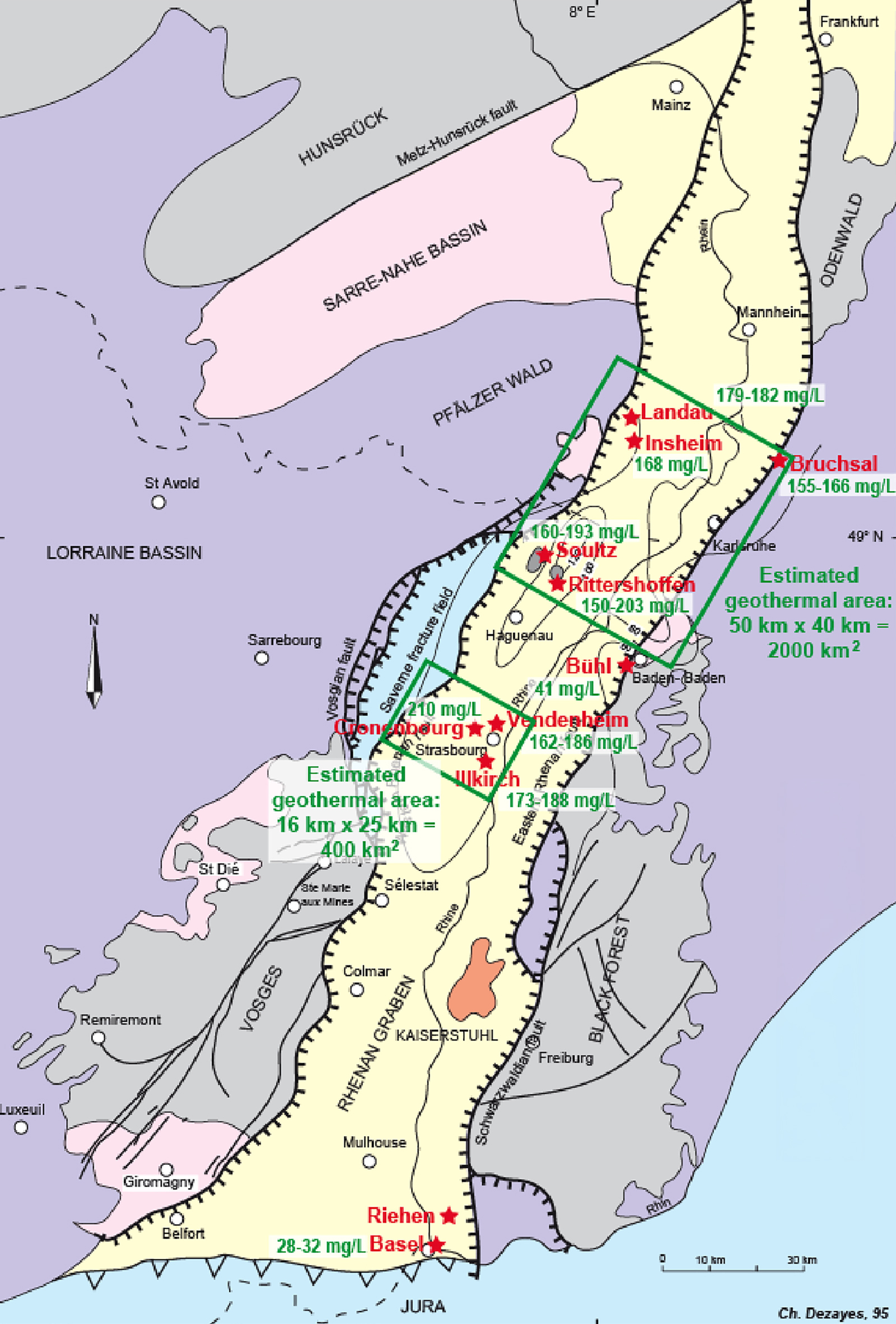
Map showing current lithium concentrations in deep geothermal brines in the Upper Rhine Graben (in green) and the areas selected for estimating potential geothermal resources in lithium (green boxes), taken from an article published in Geothermics (B. Sanjuan et al.). © brgm
As part of the SIMGEO project, supported by Ademe, BRGM has developed a multi-physical, multi-scale subsurface imaging solution that improves the characterisation of deep geothermal reservoirs. Associating seismic and electromagnetic data with borehole and laboratory measurements, this methodology combines innovative approaches borrowed from geophysics, petrophysical modelling and artificial intelligence. It provides a more accurate estimate of the porosity and properties of the reservoir, with a mean error of less than 2.5% in the tests carried out. These advances pave the way for more efficient deep geothermal exploration.
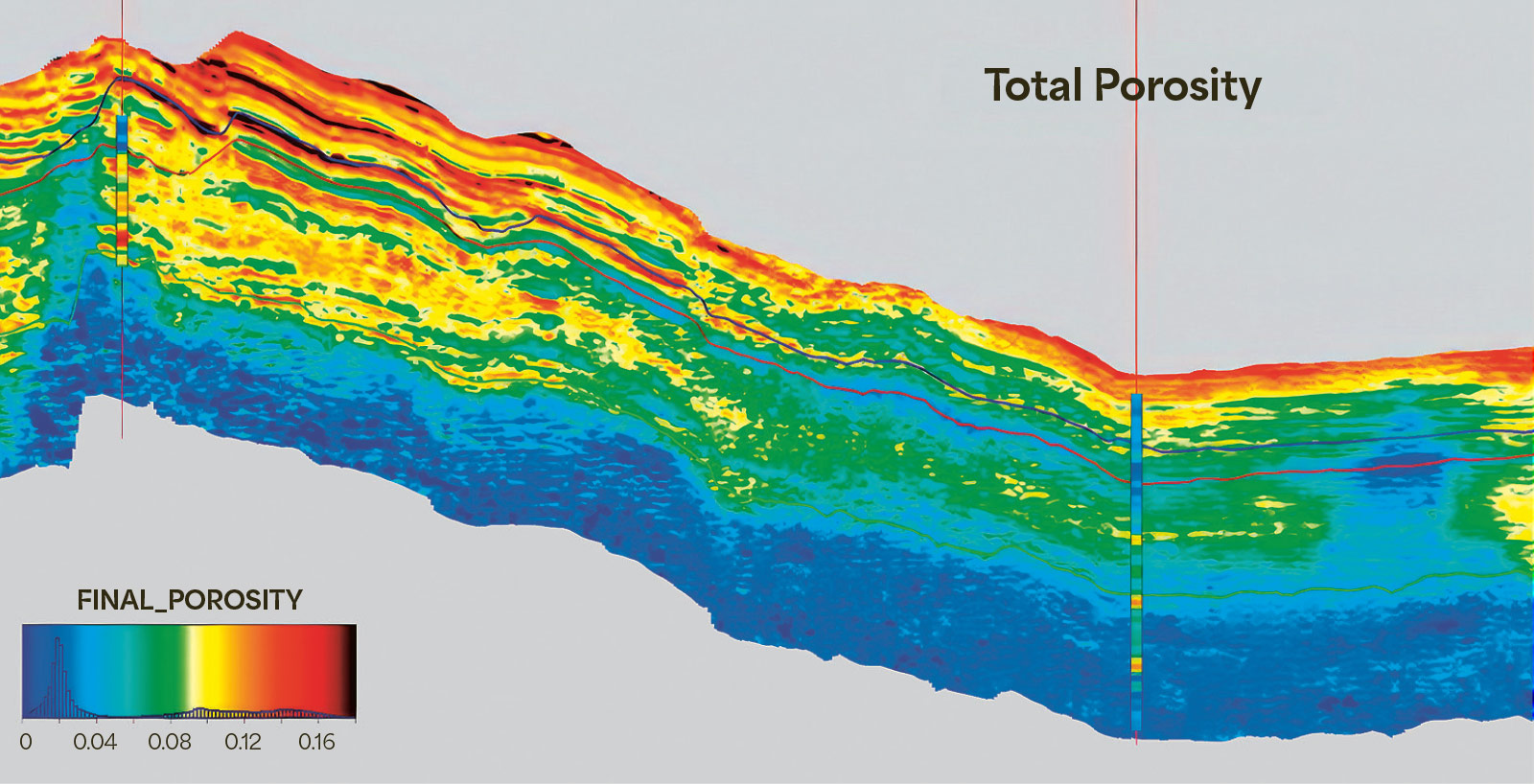
Estimating the porosity of a deep geothermal reservoir by integrating seismic and non-seismic data. © brgm
A collaborative, multidisciplinary programme was set up in 2025 to train a new generation of European experts in the exploitation of geothermal resources. Able to welcome 19 PhD students, the MiningBrines programme fosters interaction between different communities by incorporating research activities with academic and industrial partners across all related fields (geology, geochemistry, petrophysics, modelling, AI, economics, etc.). BRGM is a training partner and is also involved in nine PhD theses, two of which it is supervising.

