

Accounts
A year of transformation and growth
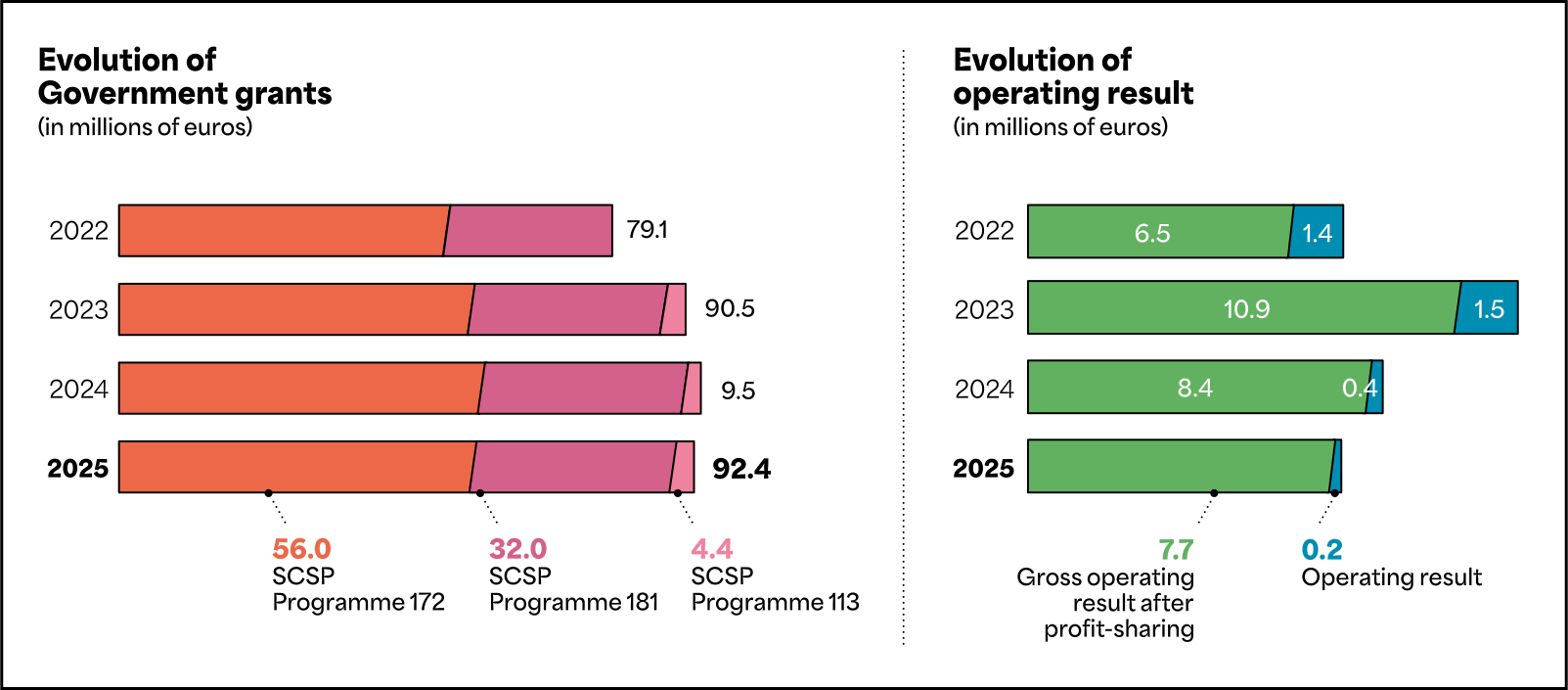
BRGM, along with four other public research institutions (Inrae, Cirad, Ifremer and IRD) is a State operator under programme 172 of the organic law on finance acts (LOLF). It also receives subsidies for public service expenditure (SCSP) under programme 181, in particular for its activities of “support for public-policy development” and “post-mining”. Finally, it benefits from an SCSP subsidy under programme 113 to finance the piezometric network.
At the BRGM Group level
The net consolidated profit for the group stands at €1.9M compared to €0.9M in 2024 The main contributions of the entities are as follows: €0.9 million for BRGM Epic; €0.6M for BRGM Invest; €0.8M for IRIS Instruments; €0.1M for CFG Géothermal. BRGM Explore’s results remain close to break-even.
The year 2025 saw a number of changes to the Group’s scope and organisation. BRGM Epic acquired the shares in BRGM Explore held by BRGM SA, making the company a first-tier subsidiary. The legal framework for quasi-public management was also consolidated at the end of the financial year, with a view to full implementation in 2026. Against this backdrop, BRGM Explore has continued to expand its operations, particularly within the framework of the IRM, by strengthening its resources and carrying out new field campaigns. At the same time, BRGM Invest has acquired further shares in Lyncée Traçabilité, CaliCO2 and Geolinks.
At the BRGM Epic level
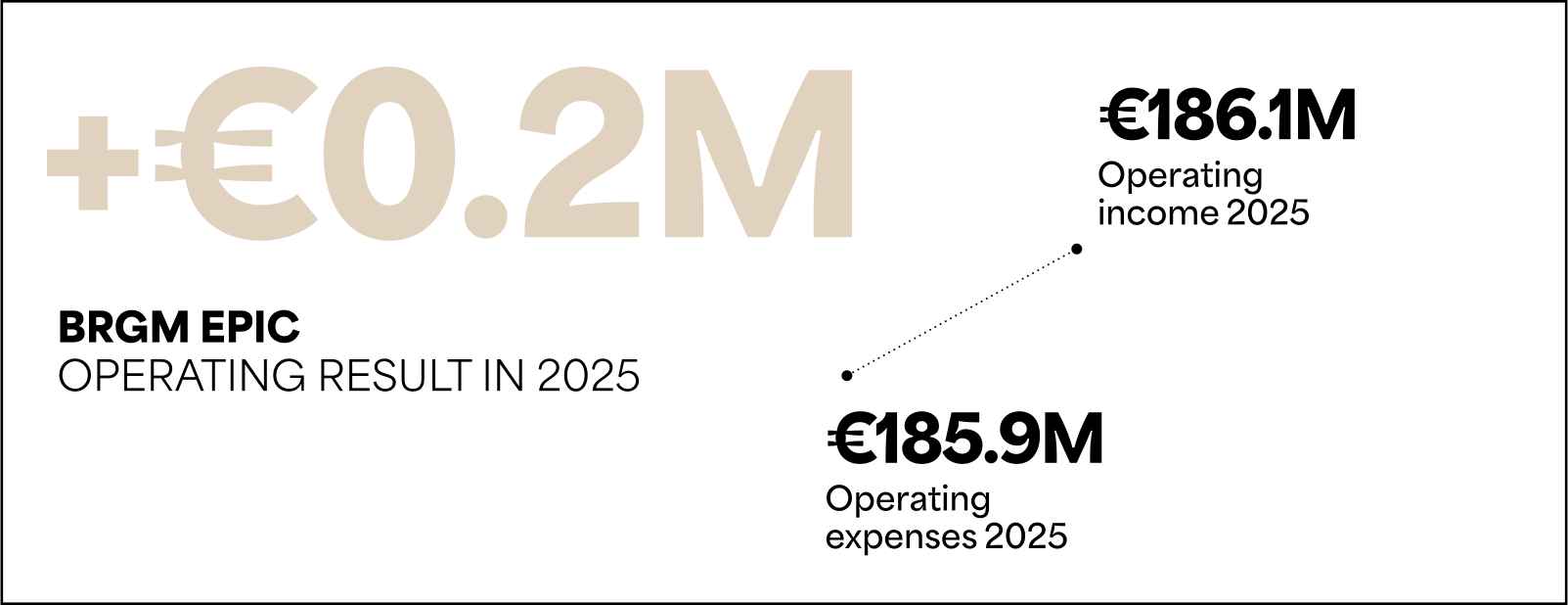
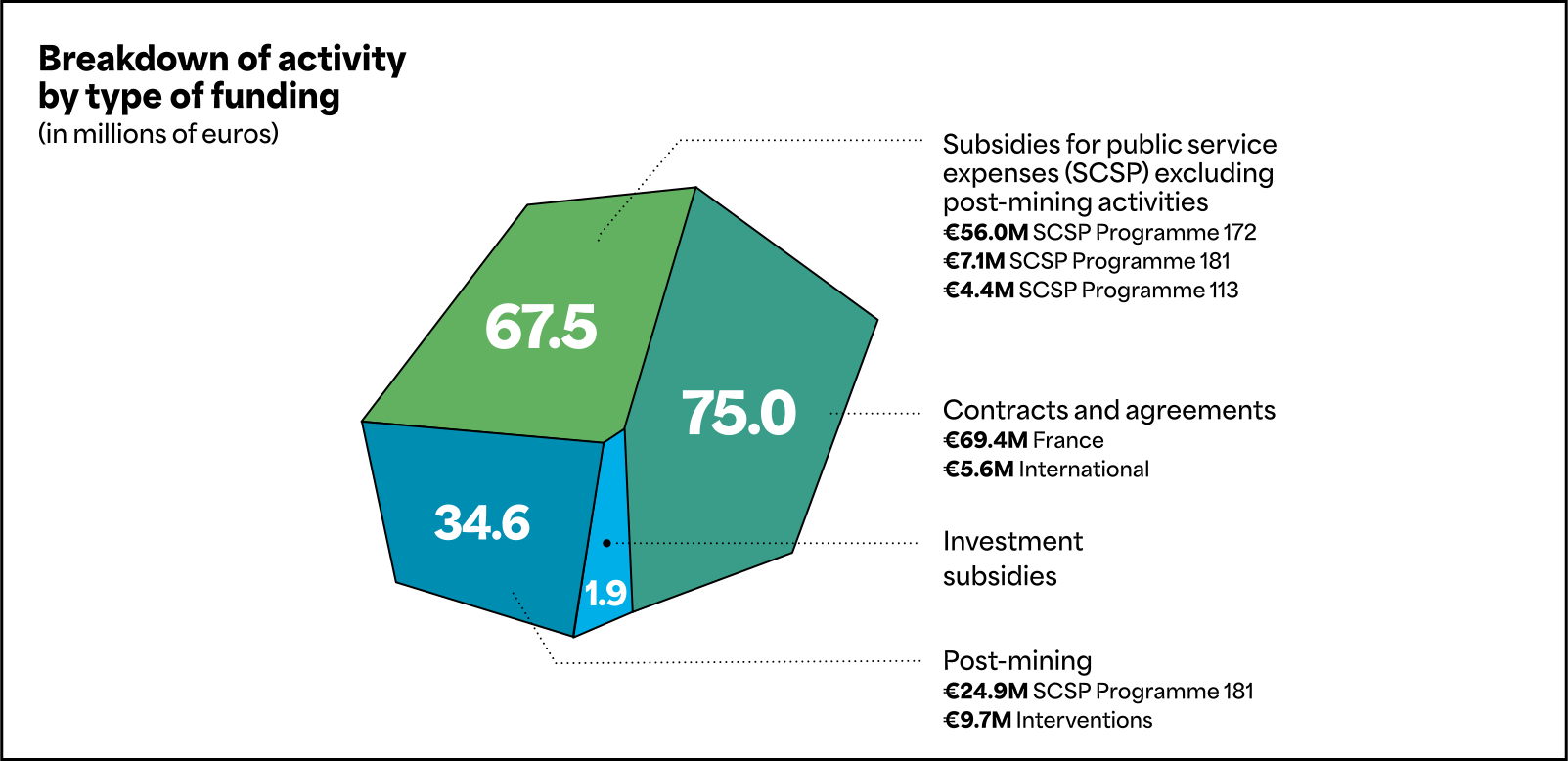
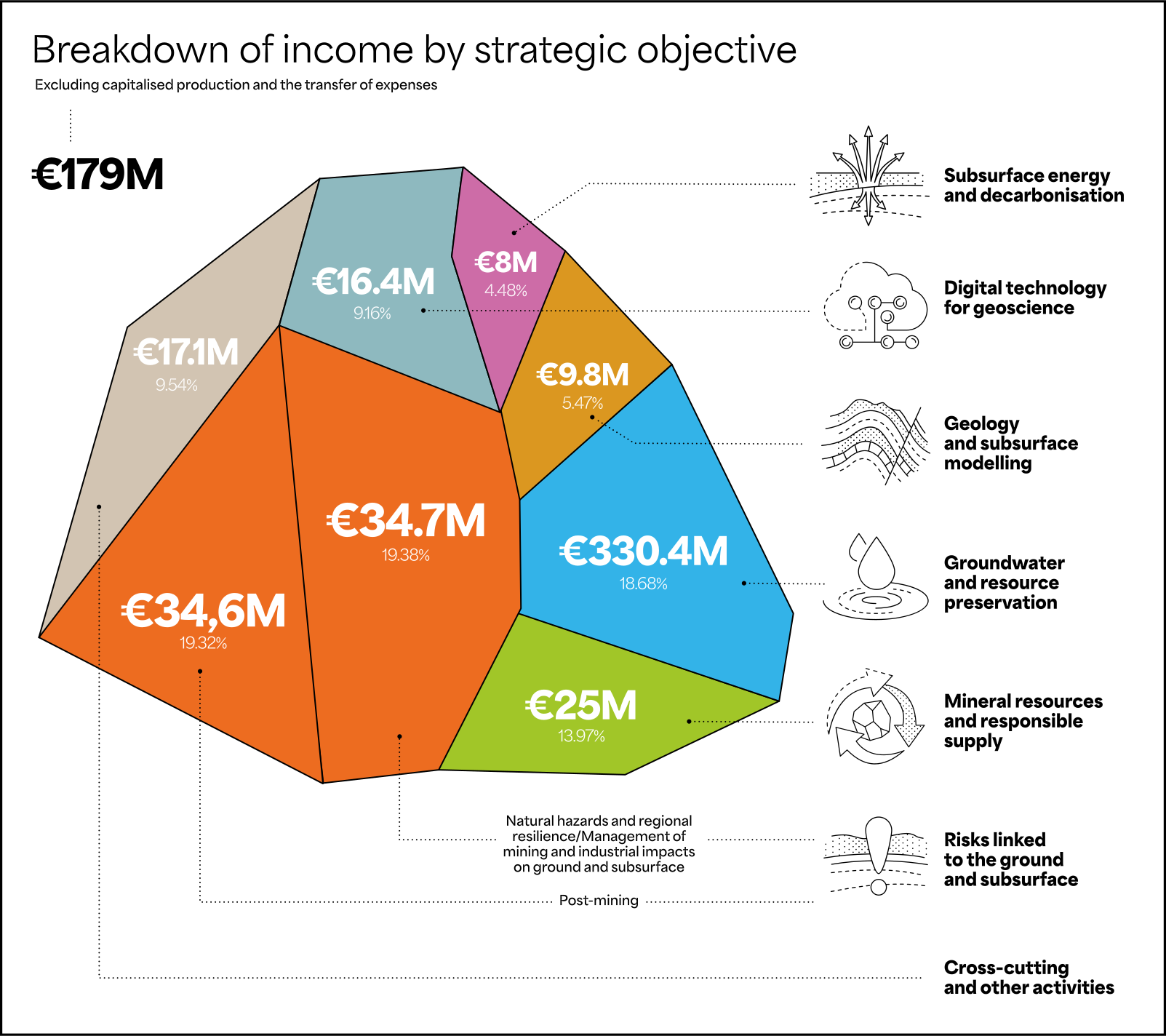
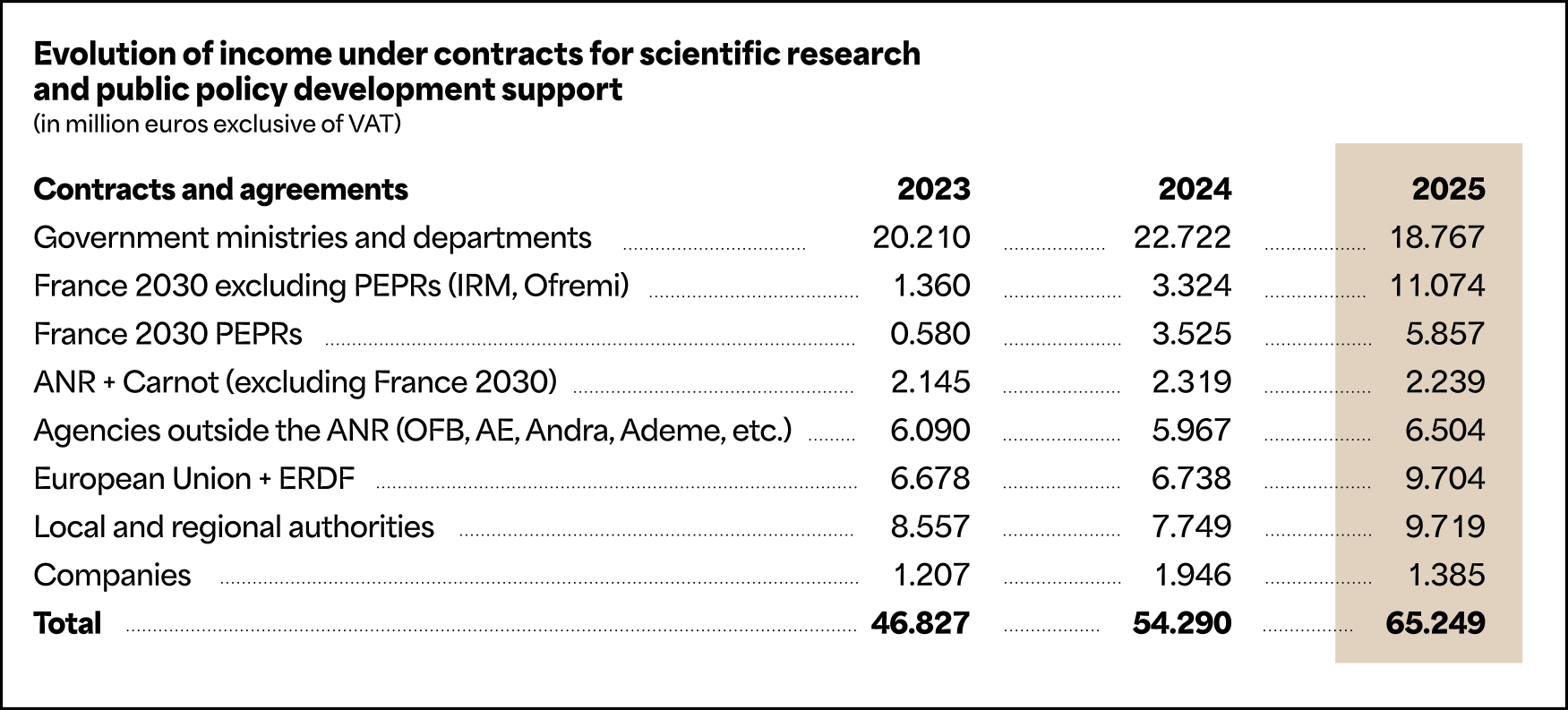
For BRGM Epic, the financial year ended with a net profit of €0.4M, compared with €1.0M in 2024. Operating profit stood at €0.2M and financial profit at €0.3M. Excluding write-backs of reserves and expense transfers, resources related to current activity amounted to €177.8M, i.e. an increase of 6% compared to the previous financial year. This growth is attributable to increases in both non-post-mining activities (€145.2M, up 6%) and post-mining activities (€34.6M, up 8%). Contracts and agreements, excluding investment grants, totalled €75M, up 12% compared to 2024. The financial year thus saw an increase in revenue and funds from current activities.
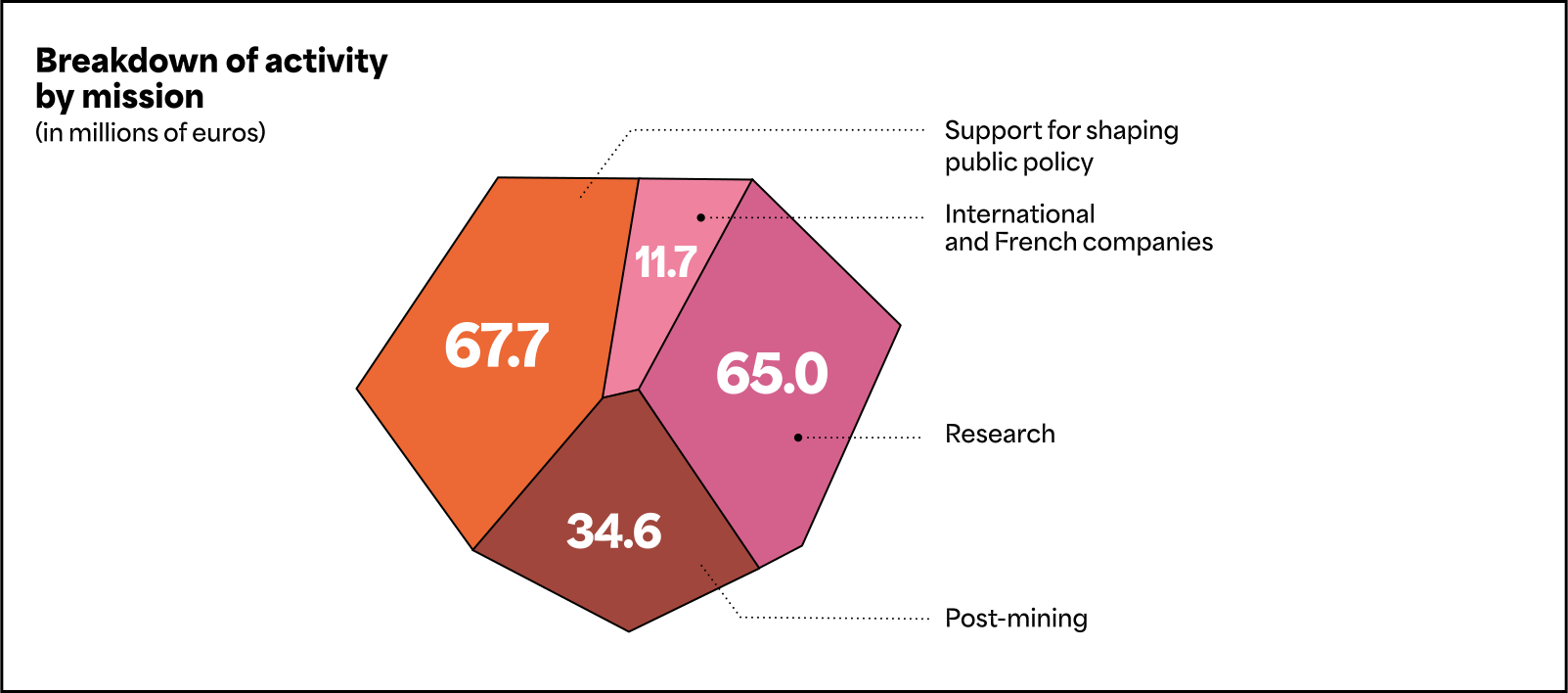
This growth is primarily driven by the ramping-up of the IRM project, but also by the momentum of activities funded under France 2030, in particular the PEPRs coordinated by BRGM (OneWater, IRiMa and Subsurface), as well as the project on strategic metals as part of the PEPR Recyclability programme. It is also due to the growing importance of European projects, whose contribution to scientific activity continues to increase. Research output thus stands at €65M, whilst public policy support activities amount to €67.8M including the IRM, or €58.3M excluding the IRM. Co-funding rates rose in 2025, both for public policy support and for research: they stand at 83.3% and 53.6% respectively, compared with 78.7% and 51.3% in 2024. This trend can be attributed in particular to the ramping-up of IRM services, which are 100% funded, as well as to the high volume of work on PEPR projects, European projects and contract research.
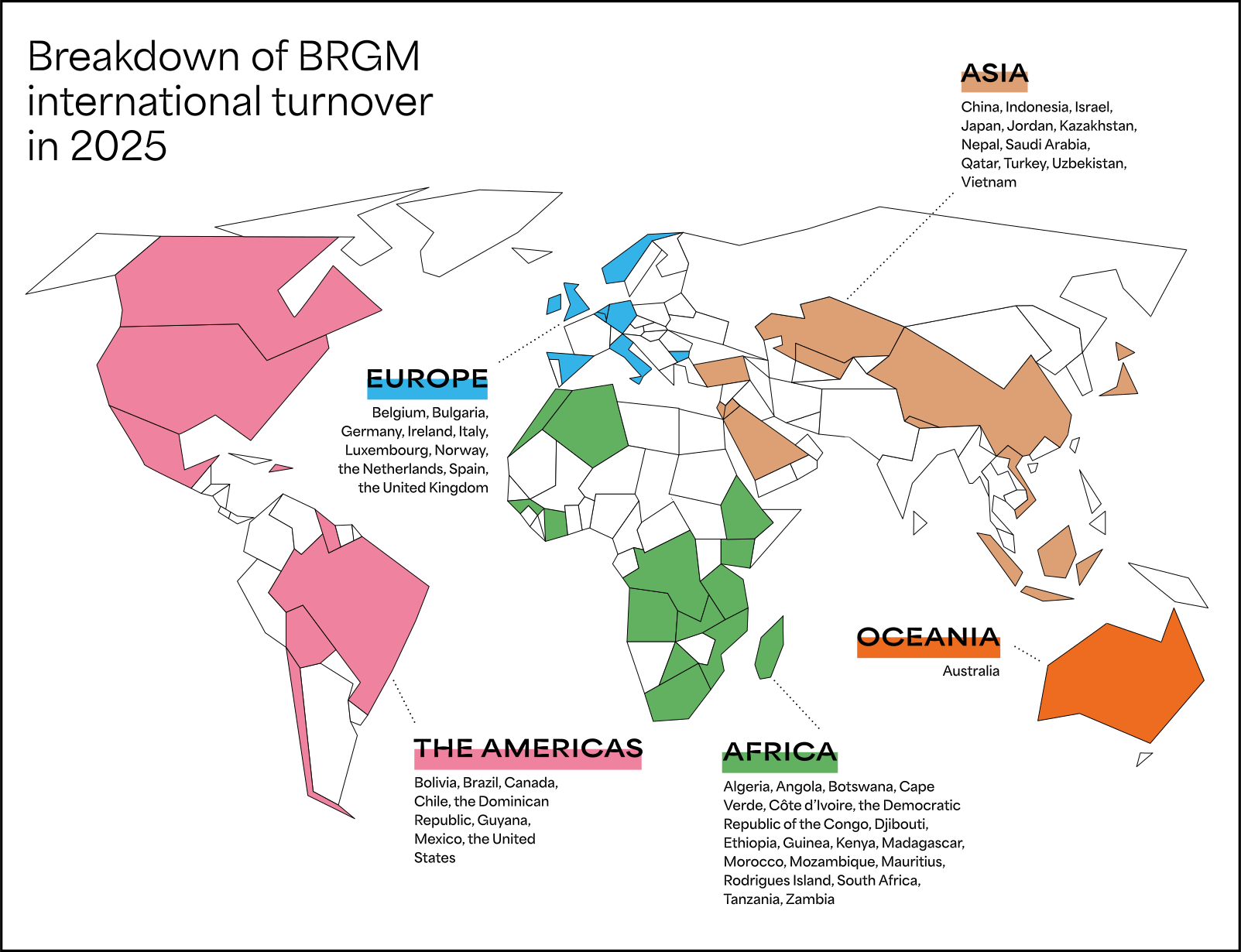
However, this positive trend must be qualified by the following remarks. International business has fallen by nearly 20%, and sales in France have declined by 27%, due to the teams’ heavy involvement in the organisation’s other activities. Similarly, following an exceptional year in 2024, the value of orders signed has fallen sharply, from €92.7M excluding IRM (€145M including IRM) to €54.7M in 2025. Although this decline can be partly attributed to the record high reached in 2024, it, together with the decline in commercial activity, is a cause for concern for 2026, despite the fact that there is still a great deal of work to be done on existing contracts.
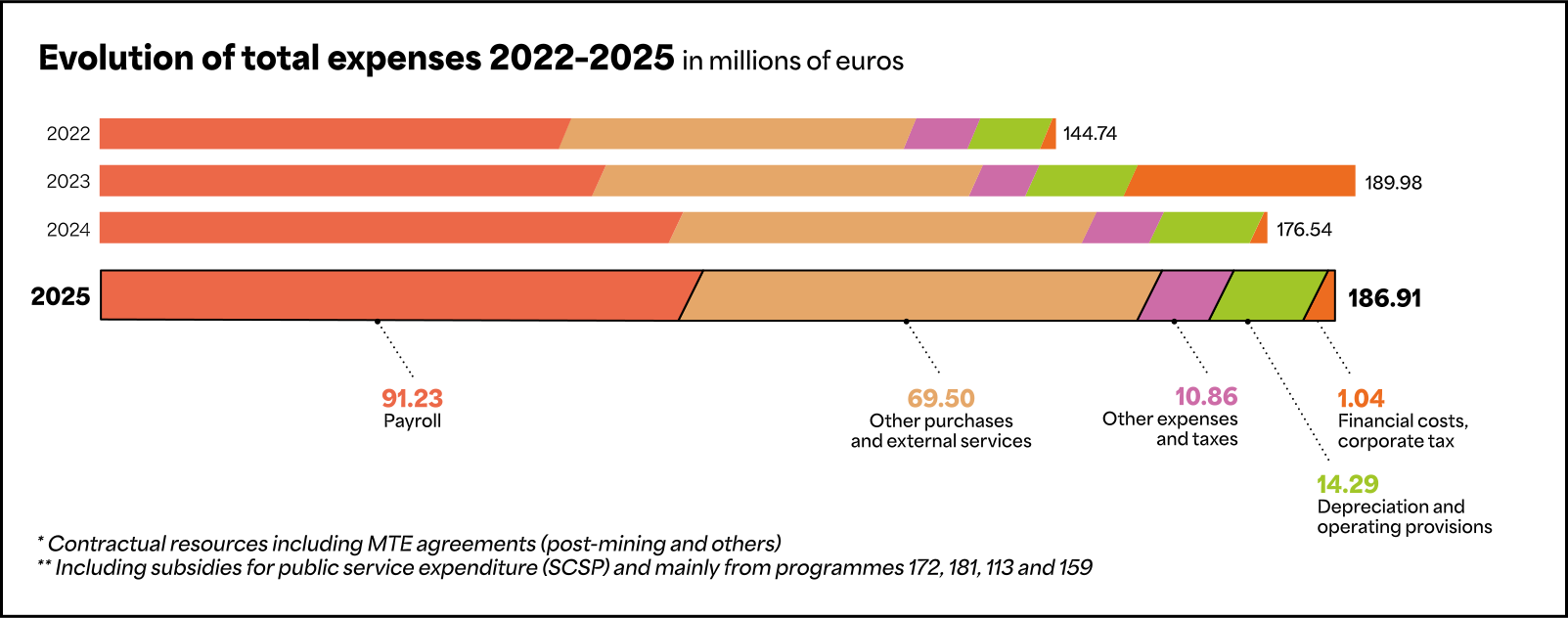
Operating expenses, excluding provisions and reversals, amounted to €171.6M, an increase of €10.7M compared with 2024 (up 6.7%). This trend is mainly due to the rise in operating costs, linked to the increase in business activity, as well as the rise in staff costs, which reached €91.2M in 2025, compared with €87.9M in 2024 (up 3.7%). This increase includes an average remuneration adjustment rate for existing staff (RMPP) of 2.5%, as well as the payment of a value-sharing bonus, a profit-sharing bonus and a full employer contribution.
In 2025, the resources allocated to post-mining activities increased by 8%, driven by a combination of monitoring activities and construction work. The monitoring activity, funded by a public service expenditure (SCSP) grant of €24.9M – a slight increase over 2024 – includes €0.3M in appropriations carried over from the previous financial year; however, it is characterised by an underspend of €0.4M, carried forward to 2026, largely as a result of the cost-saving measures implemented. Revenue from construction work, meanwhile, stands at €9.5M, compared with €7.3M in 2024.
The financial result stood at +€0.3M, compared with +€0.8M in 2024. Cash flow from operations remains at a high level of €7.6M for the EPIC. However, it does not cover all the investments made during the financial year, which totalled more than €25M, against a backdrop of rising working-capital requirements. The EPIC’s cash position thus stood at €77.6M at the end of 2025, compared with €110.2M at the end of 2024
The 2025 financial year reflects the continued momentum in BRGM’s activities, driven by several key projects, whilst also revealing increased pressure on its financial resources. These developments call for particular attention to ensure the sustainability of the business model and the terms of financing for investments in the coming financial years.