Image
Légende
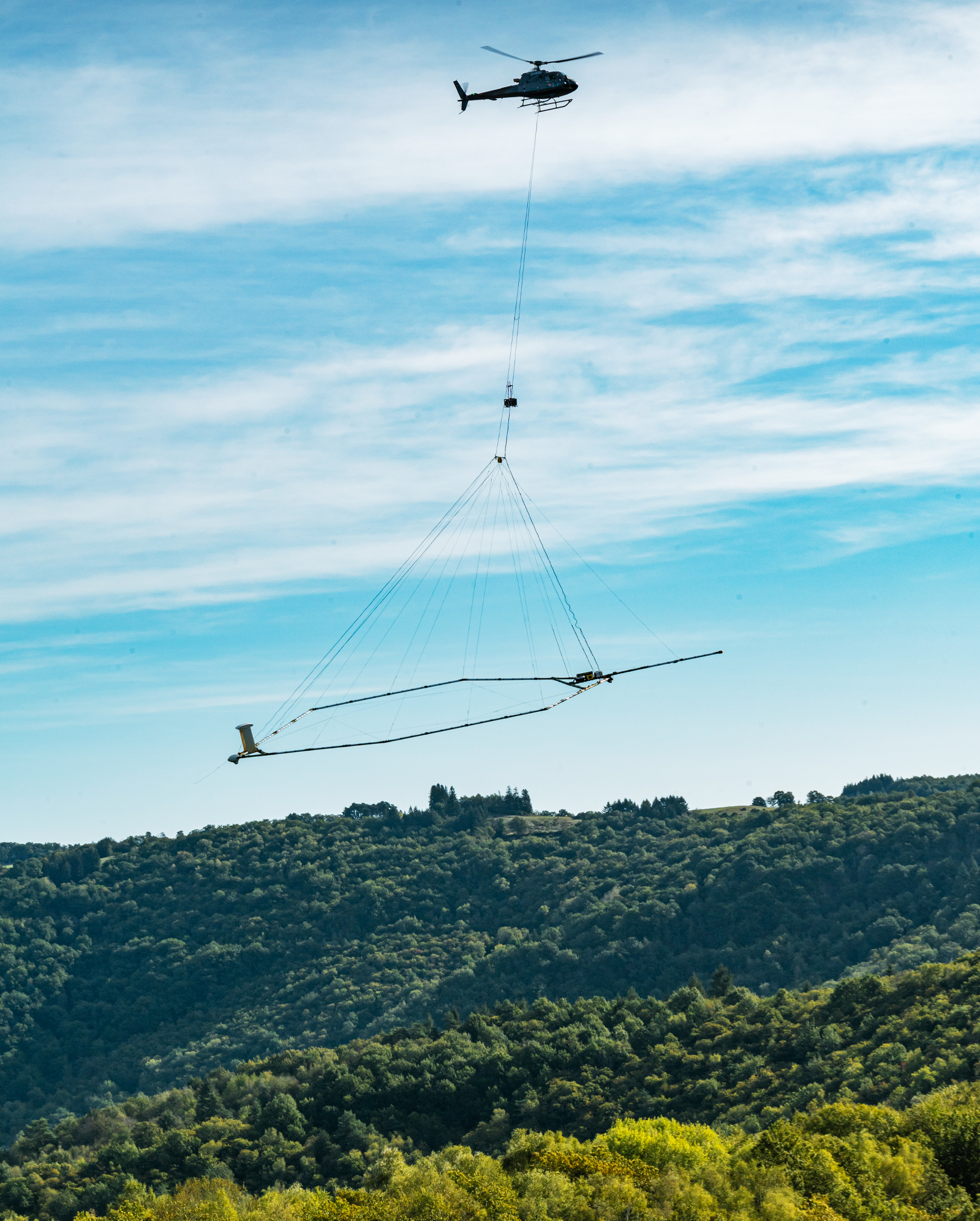
Geophysical data are collected primarily through airborne surveys like this one in the Massif Central. © Alexandre Magnan
 French geological survey
Mineral resources and responsible supply
Geophysical data are collected primarily through airborne surveys like this one in the Massif Central. © Alexandre Magnan
The technologies required for the energy and digital transitions use vast quantities of mineral resources, such as lithium, cobalt, nickel, copper and rare earths, and alert us to the urgency of securing mineral supply to improve economic resilience and support the need to reindustrialise. This involves making efforts to not only reduce mineral use but also develop recycling of mineral-rich waste and explore France’s subsurface mineral resources, with the aim of reducing our reliance on imports.
BRGM is recognized for its long-standing expertise in this field – the institution carried out France’s first mineral resources inventory from1970 to 1995 – and has been commissioned by the French Government to update our knowledge of France’s subsurface mineral resources. This five-year national inventory aims to identify areas that are likely to contain valuable materials. “As many as 55 mineral resources are now considered strategic or critical and are being identified as part of this inventory, compared with just 22 in the final years of the previous campaign,” says Blandine Gourcerol. This goal aligns with the provisions of the Critical Raw Materials (CRM) Act, an EU regulation on implementing and monitoring national exploration plans in each EU Member State.
Five priority prospective areas have been identified in mainland France and French Guiana. The work involves first collecting geophysical information, including gravimetric, magnetic/spectrometric and electromagnetic data, and geochemical information by working on the ground and using airborne instruments. “We are maximising efficiency in this phase by using the very latest mineral exploration technologies and the samples we kept from the last mining inventory,” explains Blandine Gourcerol.
RGM’s subsidiary BRGM Explore and other expert companies are helping us with the field work, including geophysical and geochemical surveys. Due to French Guiana’s difficult terrain, an innovation competition was organised to collect geophysical data there, and nearly 14,000 stream sediment samples were collected in 2025 across more than 1,650 French municipalities. A laboratory complying with the standards of the mining industry was also established to ensure that samples were prepared appropriately and could undergo multi-element analyses to detect mineral “defects”.
The mineral exploration data were then interpreted, drawing on the full range of expert knowledge within the BRGM group. In addition to its cross-disciplinary expertise, the institution is calling on innovative companies to deploy other technologies such as artificial intelligence. “Using the mineral defects we have identified and new solutions, we are working towards a systematic, consistent interpretation across all areas while improving quality where possible,” says Blandine Gourcerol.
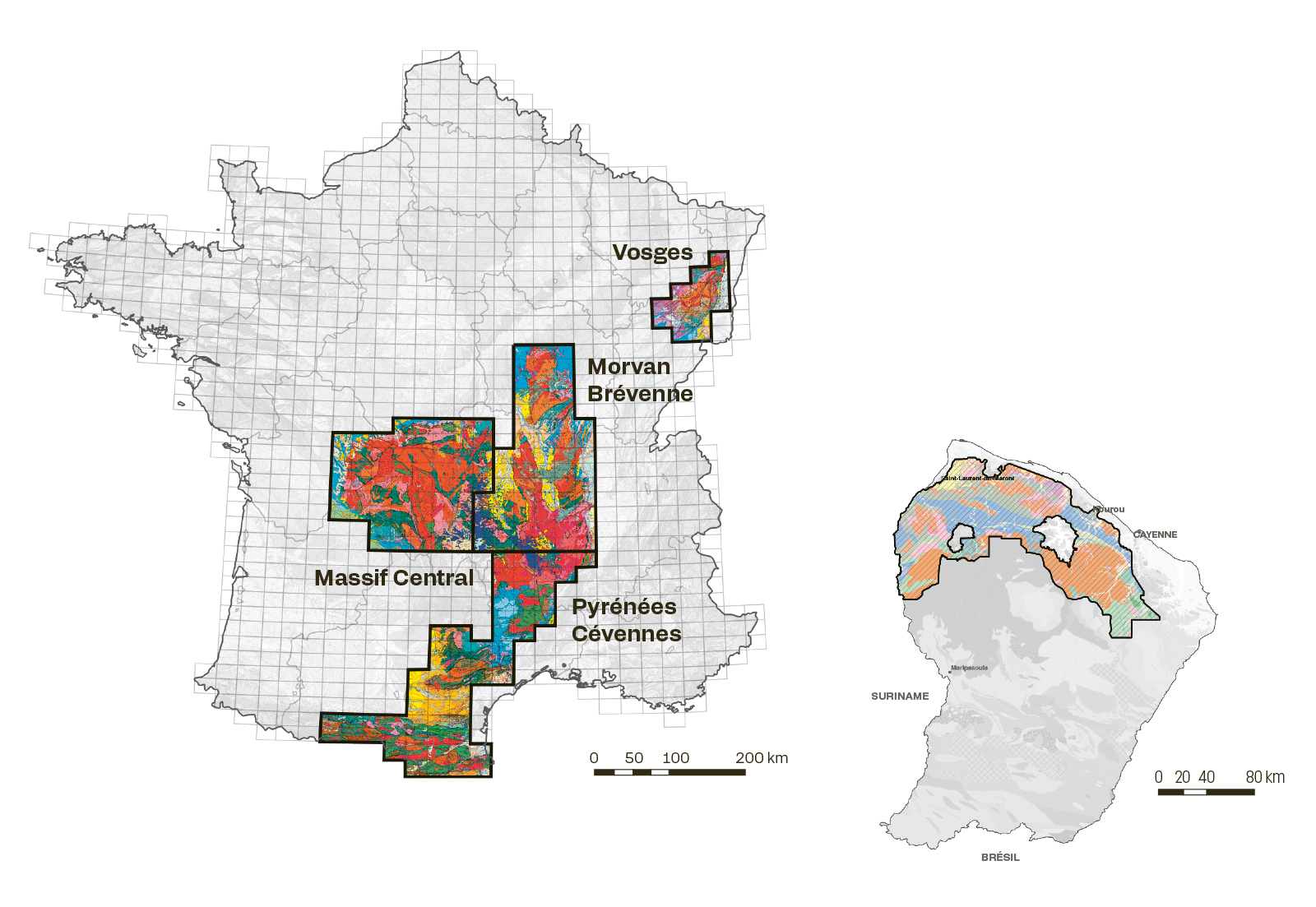
Five areas in mainland France and French Guiana are being investigated as part of a project to update the national mineral resources inventory. © BRGM
In each area covered by the inventory, we are focusing on regional engagement with Government departments, local and regional authorities and communities, and conducting scientific outreach to make people aware of the project’s economic and societal implications and technical aspects. A comprehensive “Frequently Asked Questions” (FAQ) section has also been published on the brgm.fr website. Furthermore, the IRM is an exceptionally effective platform for professional training aimed at people in or seeking geoscience careers, attracting many recent graduates. In French Guiana, the IRM will lead to the implementation of a certification scheme for mining exploration in tropical forest environments.
The findings of the mineral resources inventory will be published as maps of prospective areas for mineral deposits, as and when the surveys are completed, according to the following plan: Vosges in July 2026, Massif Central in September 2027, Morvan-Brévenne in December 2027, Pyrenees-Cévennes in September 2028 and north-eastern French Guiana in February 2029.