Image
Légende
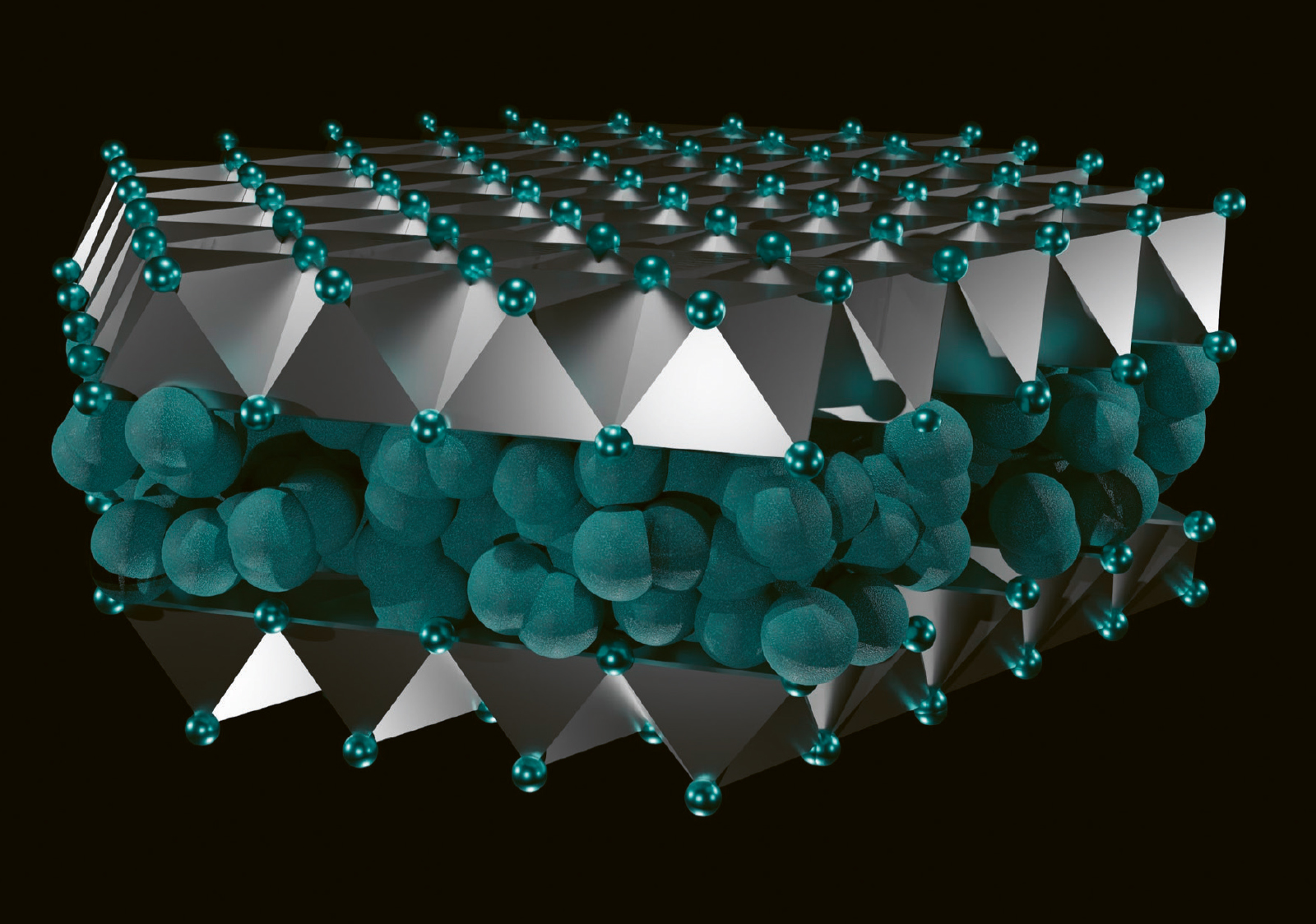
The process developed by the start-up CaliCO2 is based on electrolysis-assisted CO2 capture using layered double hydroxides. © Adobe Stock
 French geological survey
Innovation
The process developed by the start-up CaliCO2 is based on electrolysis-assisted CO2 capture using layered double hydroxides. © Adobe Stock

The history of CaliCO2 takes us back to the early 2000s. Alain Seron, a process engineering researcher working on the treatment of pollutants, became interested in layered double hydroxides (LDHs) owing to their affinity for anionic substances, particularly carbonate anions. “That’s when I had the idea of using LDHs to capture carbon dioxide,” he explains, “because when CO2 dissolves in water, it forms carbonate species that can be captured by these materials through an anion-exchange process.” This discovery was followed by a series of projects, in partnership with industry in particular, to develop this alternative decarbonisation process. “We demonstrated its high potential for CO2 capture and also its adaptability to a wide variety of gases and carbon dioxide concentrations.”
Research is continuing with electrochemist Stéphanie Betelu. The aim is to optimise the process, and in particular the electrochemical regeneration of LDHs to enable their reuse over repeated cycles. By combining several techniques in a new way, the researchers describe the mechanisms and kinetics of ion transfer both on the surface and inside these materials. Their work is paving the way for the implementation of CALICO, electrolysis-assisted technology to capture and release dissolved CO2, for purposes of recovery. “Unlike existing processes, CALICO is based on an ingenious concept that significantly reduces electricity consumption by using renewable materials made from recyclable components,” points out Stéphanie Betelu.
Following a process involving several scientific publications and the filing of six patents, “the idea of setting up a company began to take shape, the aim being to take this disruptive technology from the laboratory to proof-of-concept and then bring it to market. It’s a technology likely to interest industries emitting high levels of CO2 in their flue gases, such as the cement, steel and waste incineration sectors,” points out Victor Liger. CaliCO2 was founded in March 2025 as a joint venture between the start-up studio 4elements, the two researchers – shareholders but still BRGM employees – and BRGM Invest, BRGM’s investment arm. Bénédicte Pesset explains: “This commercialisation initiative is based on an innovative set-up: the involvement of a start-up studio to found and manage the company CaliCO2, an exceptional investment by BRGM Invest at the seed stage, an exclusive licencing agreement covering past and future patents, and a two-year collaborative R&D contract to facilitate the transfer of skills.”
Based at BRGM, the start-up won Bpifrance’s i-Lab 2025 innovation competition and has raised €1.5 million in funding. “This funding will allow us to accelerate the industrial roll-out of this innovative technology and to build a team able to support our future partners,” say Vanessa Amaral de Oliveira and Jean-Baptiste Goffart, managers of CaliCO2. Research is continuing in order to improve process performance and increase maturity.
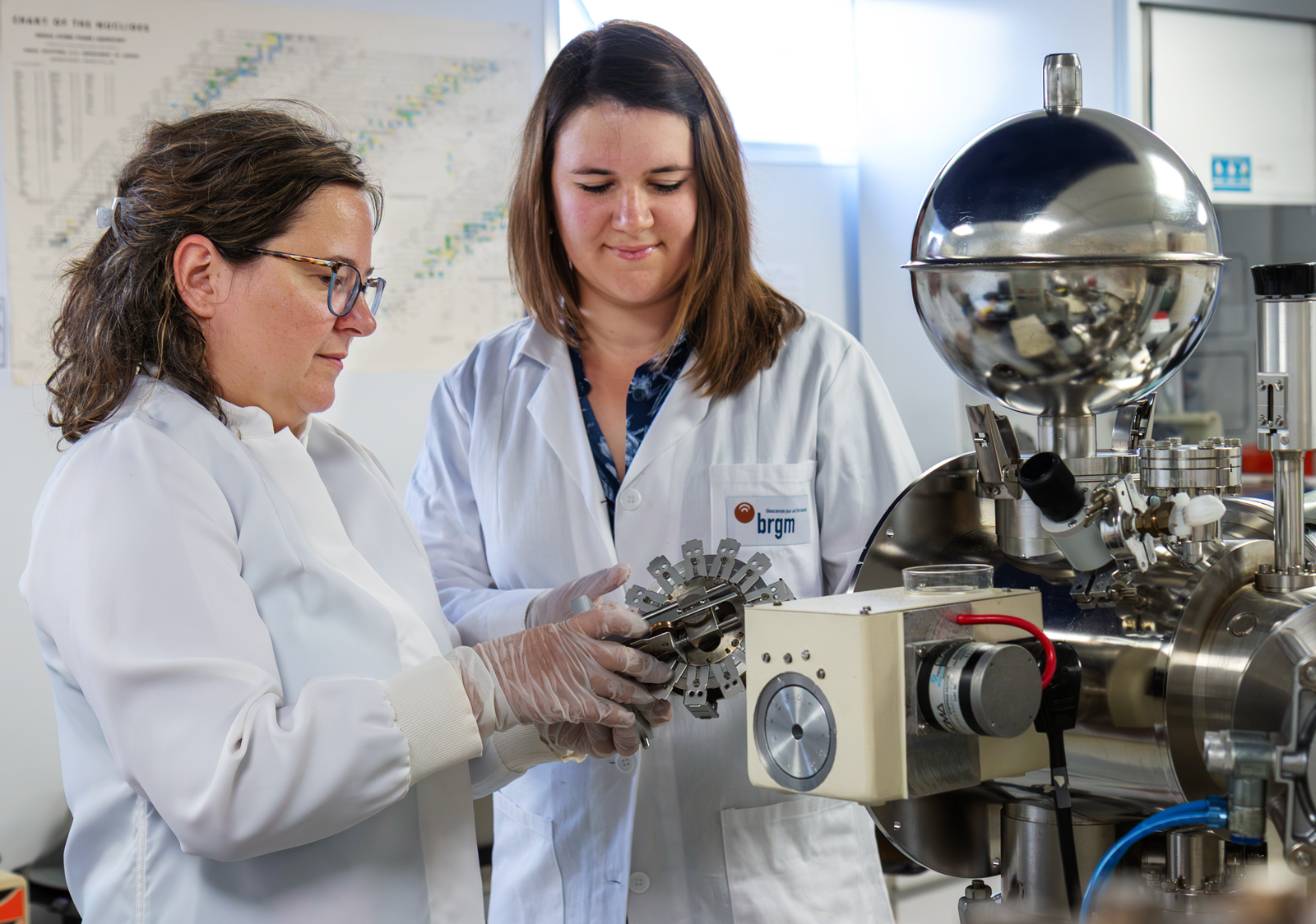
The development of Lyncée Traçabilité’s services is underpinned by BRGM’s analytical capabilities, and ability to identify mineral traces and assess their purity. © brgm
The Trace Group and BRGM Invest joined forces in October 2025 to set up Lyncée Traçabilité. The founding of this jointventure follows over two years of collaboration between BRGM and the Trace Group – an expert in digital supply chain traceability. Working with manufacturers in the aerospace, automotive, luxury and cosmetics sectors, it provides a mature and innovative service to guarantee the origin and integrity of supplies of strategic materials such as lithium, gold, copper, alabaster, titanium and mica. Bringing an innovative idea to fruition, this initiative is supported by a hybrid approach combining advanced geochemical analyses to establish each mineral’s digital fingerprint, the deployment of blockchain technology to record every stage in its journey, and the use of artificial intelligence.